
What is the carbon footprint of paper?
The “carbon footprint” is the total amount of greenhouse gases, especially CO₂, emitted throughout the entire lifecycle of a product. For paper, the carbon footprint includes:
-
Forest planting & logging – cutting trees and transporting timber consume energy and release CO₂.
-
Pulp production & printing – require large amounts of water, oil, electricity, and chemicals.
-
Office use – excessive printing and paper waste.
-
Waste treatment – if not recycled but sent to landfills or incinerated, paper continues to emit CO₂ and methane gas.
According to data from the U.S. Environmental Protection Agency (EPA):
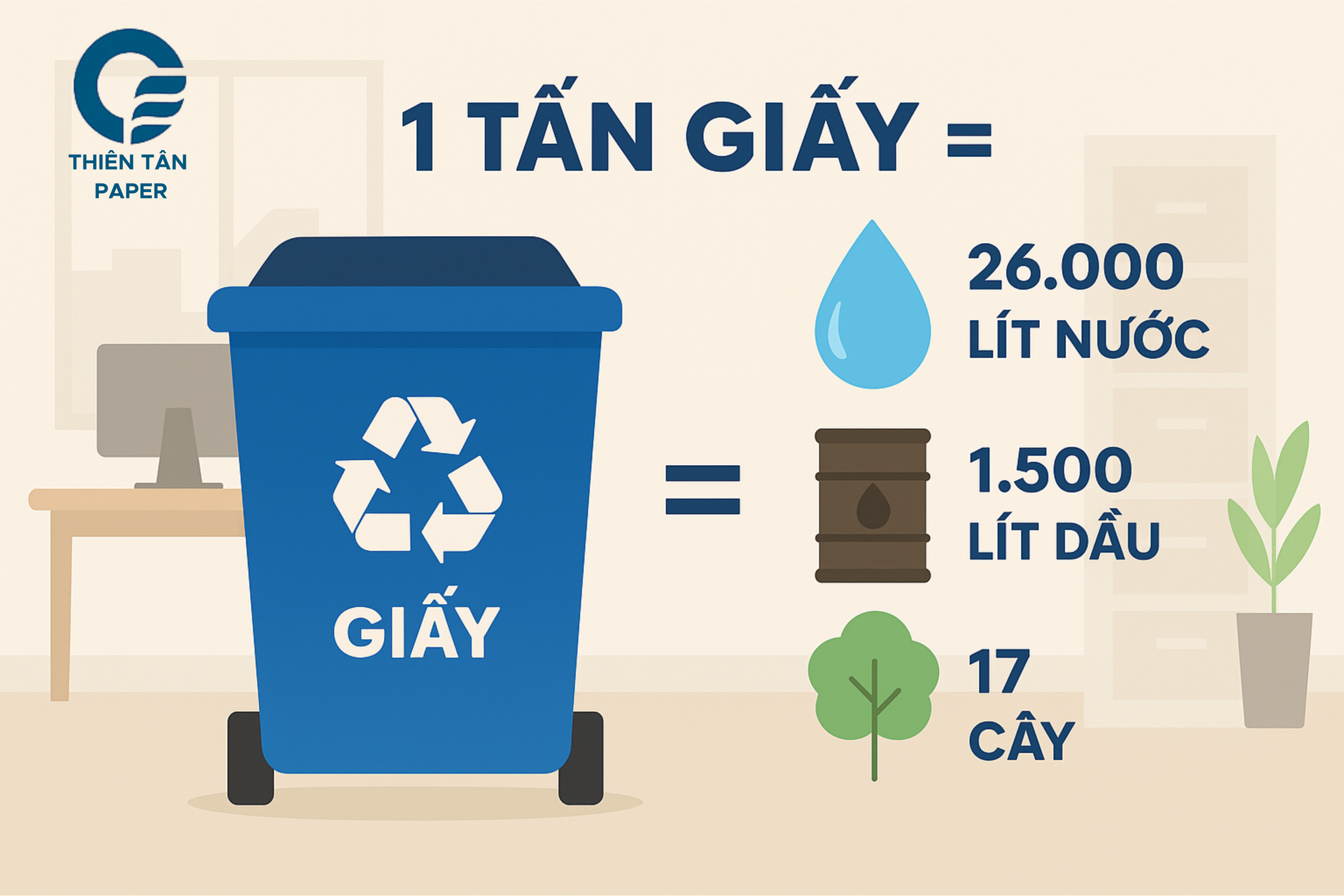
1 ton of waste paper = 26,000 liters of water + 1,500 liters of oil + 17 trees.
Office Paper – An Overlooked Environmental Threat
In corporate waste management, people often think first of plastics or metals. Office paper, however, is usually “put aside,” assumed to be biodegradable and harmless. In reality, if not recycled:
-
Landfilled paper decomposes anaerobically, releasing methane (CH₄) – a greenhouse gas 25 times more potent than CO₂.
-
The cumulative volume of office paper waste creates a silent but significant environmental burden.
What should businesses do?
-
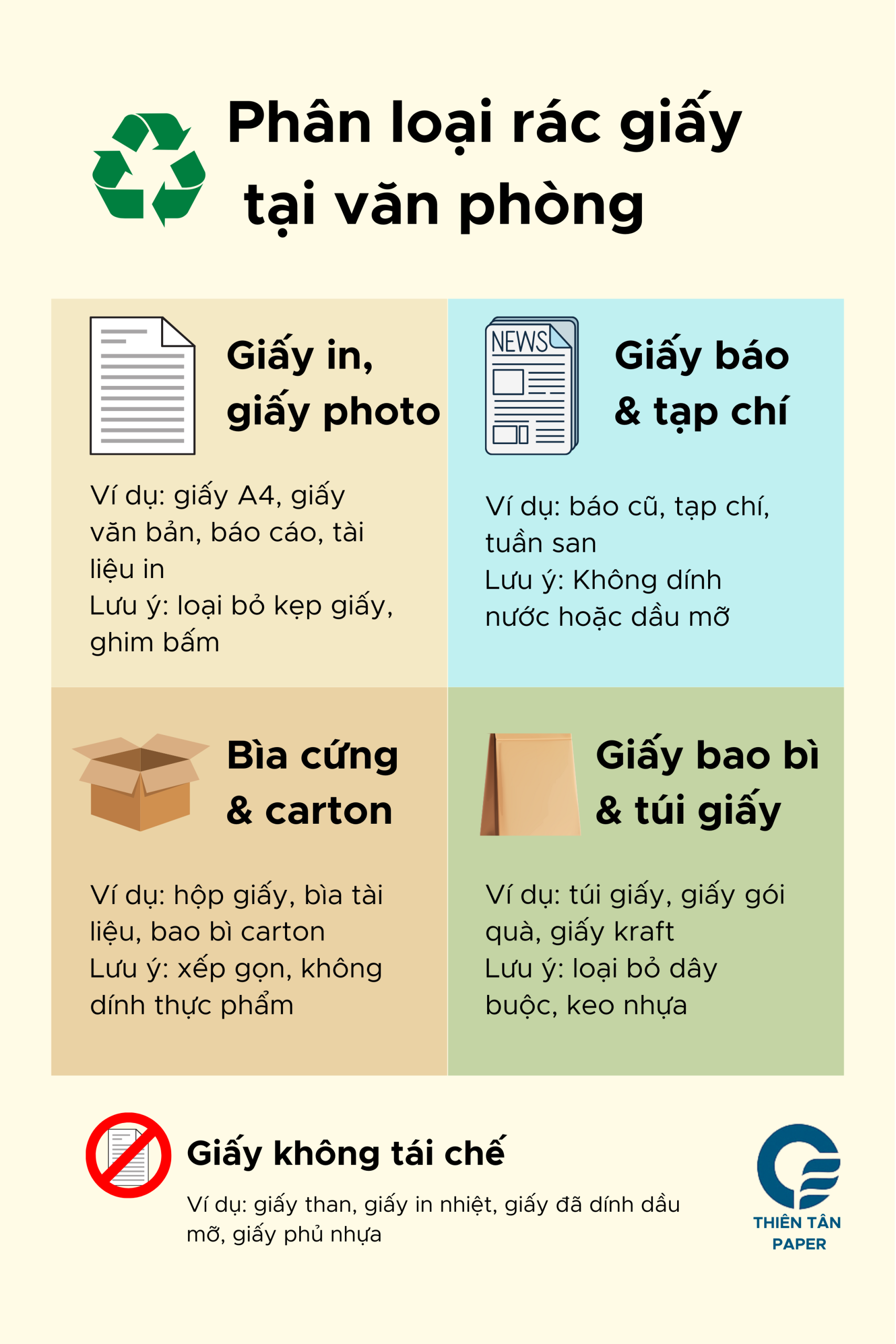
Sort at the source: Tách giấy in lỗi, báo cáo, hồ sơ hết hạn khỏi rác sinh hoạt.
-
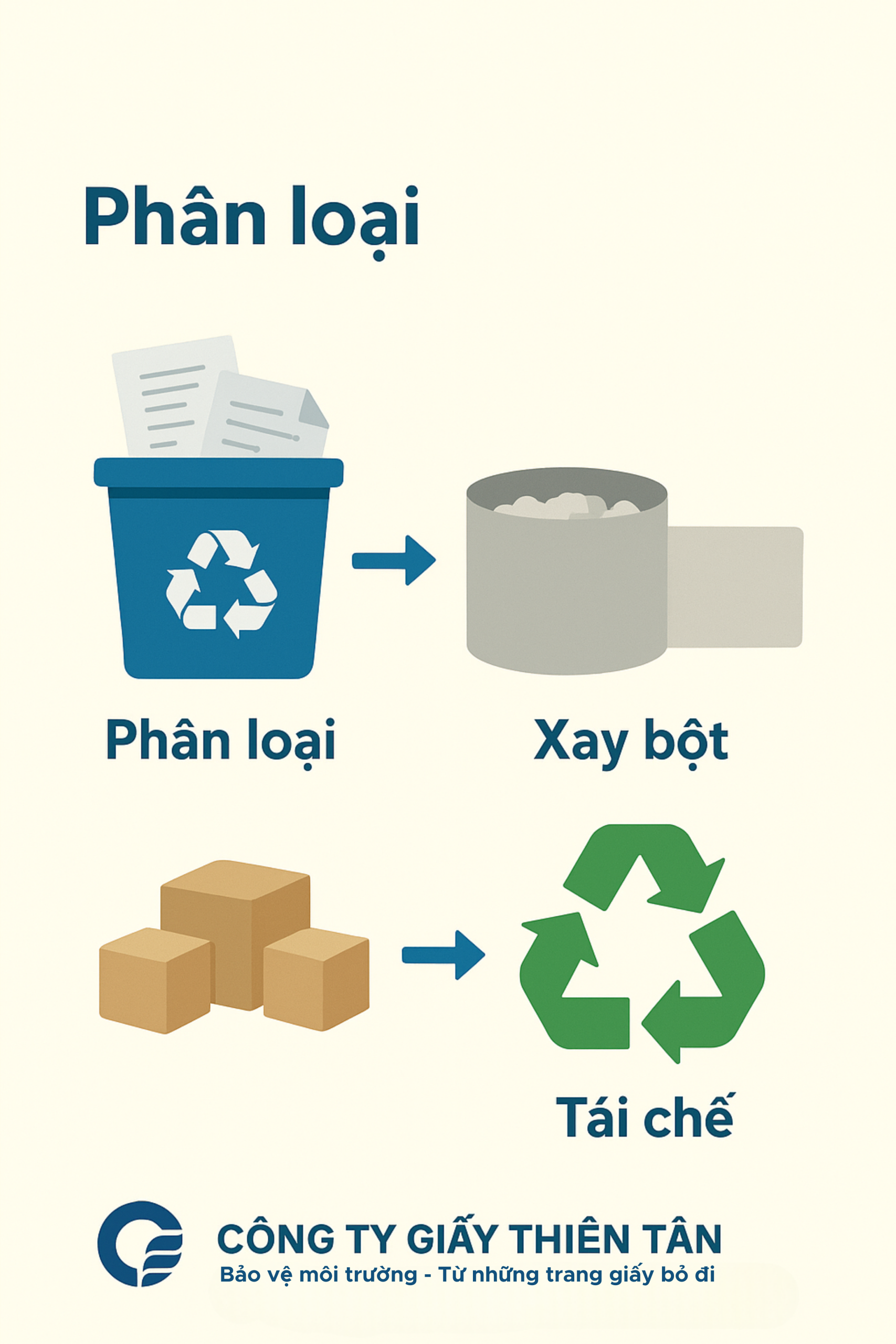
Recycle: Partner with professional collection and recycling units to turn waste paper into new raw materials.
-
Secure destruction – proper process: For confidential documents and sensitive records, ensure secure destruction before recycling.
Case Study – Vietnamese Businesses Taking Action
-
Major bank in Ho Chi Minh City: Launched a “Zero Paper Waste” program – all expired records are securely destroyed and recycled on a regular basis.
-
Technology company: Converted 70% of documents to digital format, cutting down tons of printed paper each year.
-
Manufacturing enterprise: Partnered with a recycling unit to recover all paper packaging and expired accounting records.
Result: Reduced storage costs while enhancing their green corporate image in the eyes of partners and customers.
✅ Conclusion: Office paper is not just “harmless waste” but rather a forgotten carbon footprint. When every business recognizes this and takes concrete action, we not only protect the environment but also build a sustainable culture for ourselves.


