
Why Paper Recycling Matters More Than Ever
Paper continues to play an important role in modern business operations. Contracts, invoices, reports, employee records, shipping documents, and packaging materials are still widely used across industries. As a result, organizations generate significant volumes of paper waste every year.
At the same time, businesses are facing increasing pressure to improve sustainability performance, reduce waste, and contribute to environmental protection. This has made paper recycling one of the most accessible and effective ways for organizations to support their environmental goals.
In our previous article, The Journey of Paper After Destruction: From Confidential Documents to Recycled Raw Materials, we explored how securely destroyed documents can be transformed into valuable recycled materials instead of becoming waste. But what difference does recycling actually make?
The answer is simple: even a single ton of recycled paper can help conserve valuable natural resources and support a more sustainable future.
What Happens When One Ton of Paper Is Recycled?
When paper is recycled, existing fibers are recovered and processed for reuse instead of relying entirely on virgin raw materials.
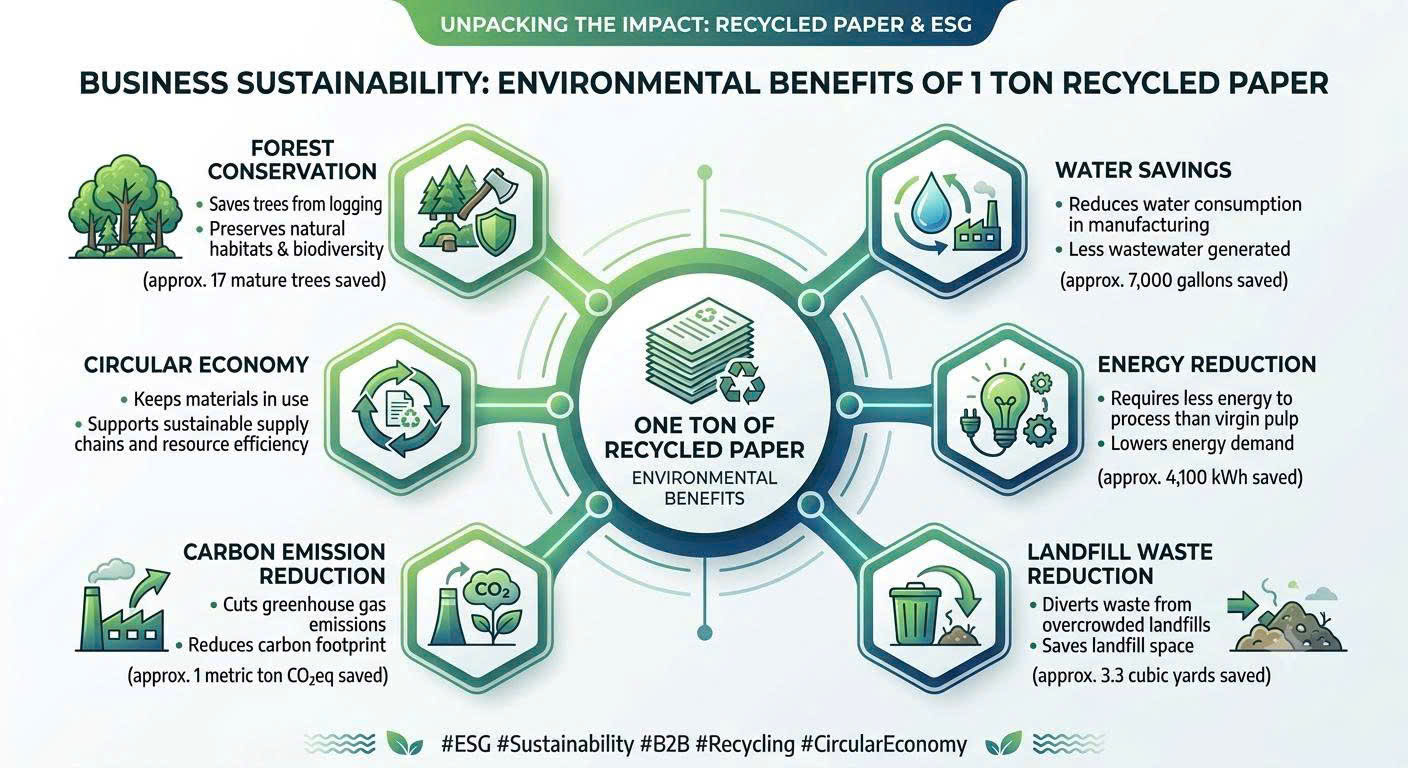
This simple action creates a chain reaction of environmental benefits:
- Reduced demand for wood-based raw materials
- Lower water consumption
- Reduced energy use
- Less waste sent to landfills
- Lower greenhouse gas emissions
- Increased participation in the circular economy
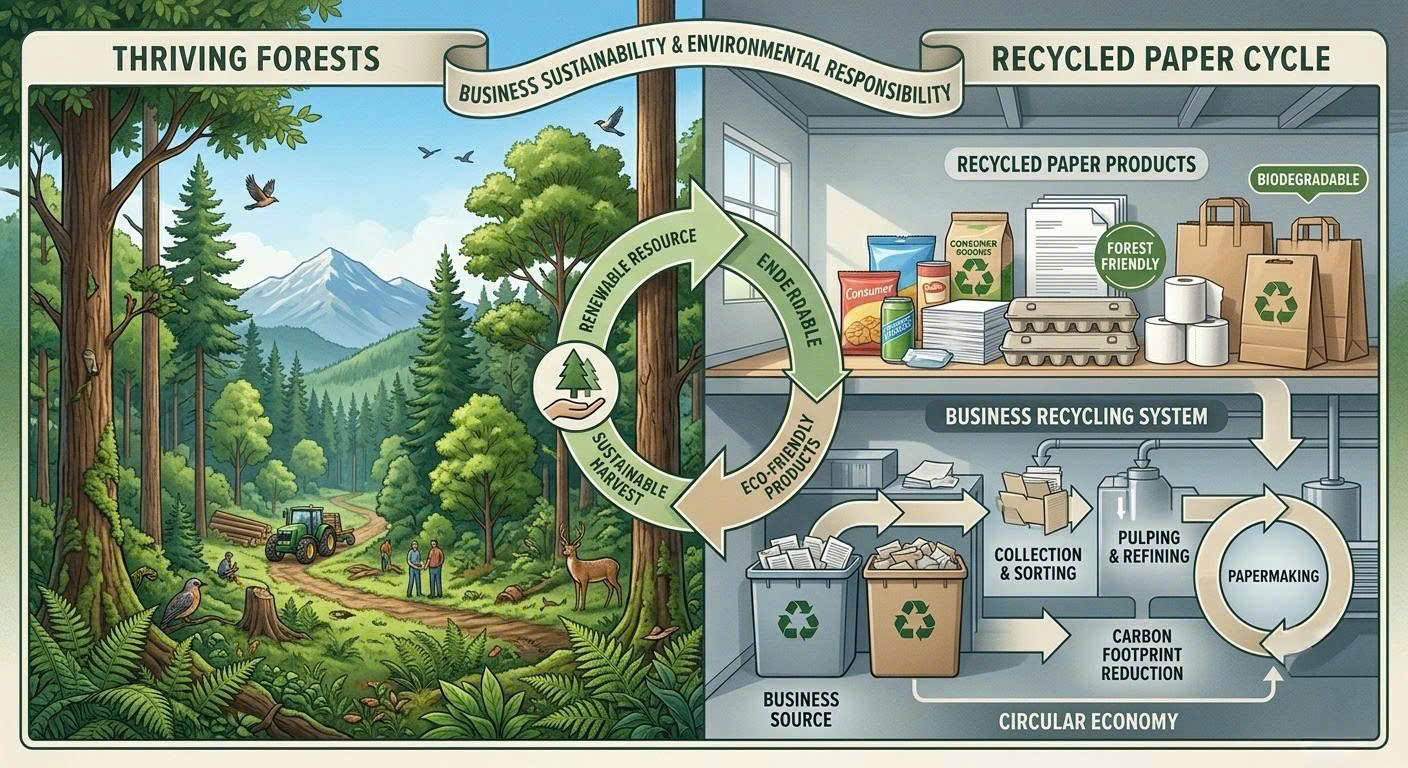
While one ton may seem like a relatively small amount, the collective impact becomes significant when businesses consistently recycle paper over time.
Protecting Forests and Natural Ecosystems
Forests are among the planet’s most valuable natural resources. They absorb carbon dioxide, regulate water cycles, support biodiversity, and provide essential ecological services.
Traditional paper production relies heavily on wood fibers. Although sustainable forestry practices have improved over the years, reducing demand for virgin pulp remains one of the most effective ways to decrease pressure on forest resources.
By recycling paper, businesses help extend the life cycle of existing fibers and reduce the need for newly harvested raw materials.
The benefits include:
- Reduced demand for timber harvesting
- Conservation of forest ecosystems
- Protection of wildlife habitats
- Support for long-term environmental sustainability
Every recycled document contributes to a more resource-efficient paper industry.
Conserving Water Resources
Water plays a critical role throughout the paper manufacturing process.
Virgin paper production requires substantial amounts of water for pulping, washing, bleaching, and processing raw fibers. Recycling paper generally requires fewer resources because the fibers have already undergone much of the initial treatment.
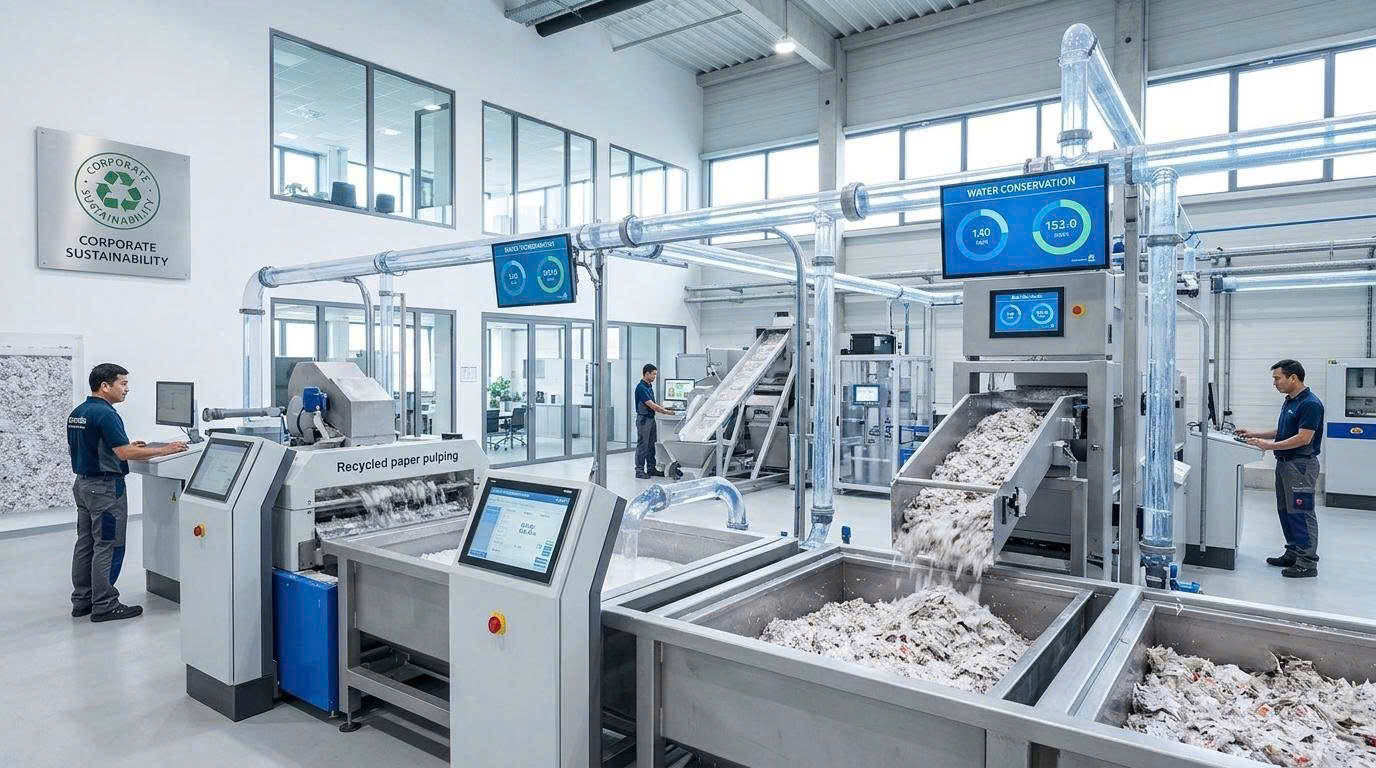
As freshwater resources become increasingly important worldwide, improving water efficiency has become a priority for many industries.
When businesses recycle paper, they help reduce the overall demand for water-intensive production processes and support more sustainable resource management.
Reducing Energy Consumption
Producing paper from raw wood fibers involves multiple energy-intensive stages, including harvesting, transportation, pulping, chemical processing, and manufacturing.
Recycled paper bypasses many of these steps.

Because the fibers have already been processed, less energy is required to prepare them for new paper products. Lower energy consumption contributes to reduced environmental impact throughout the supply chain.
For organizations seeking practical ways to support sustainability initiatives, paper recycling represents an effective and measurable action.
Keeping Valuable Materials Out of Landfills
Paper remains one of the largest components of commercial and office waste.
When paper ends up in landfills, valuable materials are permanently lost. Over time, landfill capacity becomes strained, creating additional environmental and economic challenges for communities.
Instead of allowing paper to become waste, recycling keeps materials in circulation and extends their useful life.
Benefits include:
- Reduced landfill waste
- Improved waste management efficiency
- Extended landfill lifespan
- Better utilization of existing resources
This is one of the key principles behind the circular economy model that many businesses are adopting today.
Lowering Carbon Emissions
Environmental sustainability is no longer optional for modern organizations.
Companies are increasingly expected to identify opportunities to reduce their carbon footprint and demonstrate responsible environmental practices.
Paper recycling supports these efforts by:
- Reducing demand for virgin material production
- Lowering energy consumption
- Minimizing transportation requirements
- Decreasing waste-related emissions
While recycling alone cannot solve climate challenges, it remains an important part of a broader environmental strategy.
The Connection Between Secure Document Destruction and Recycling
For businesses, environmental responsibility must often be balanced with information security.
Many documents contain sensitive information such as:
- Customer records
- Financial reports
- Employee files
- Contracts and agreements
- Business strategies
- Internal operational data
These materials cannot simply be placed into standard recycling bins.
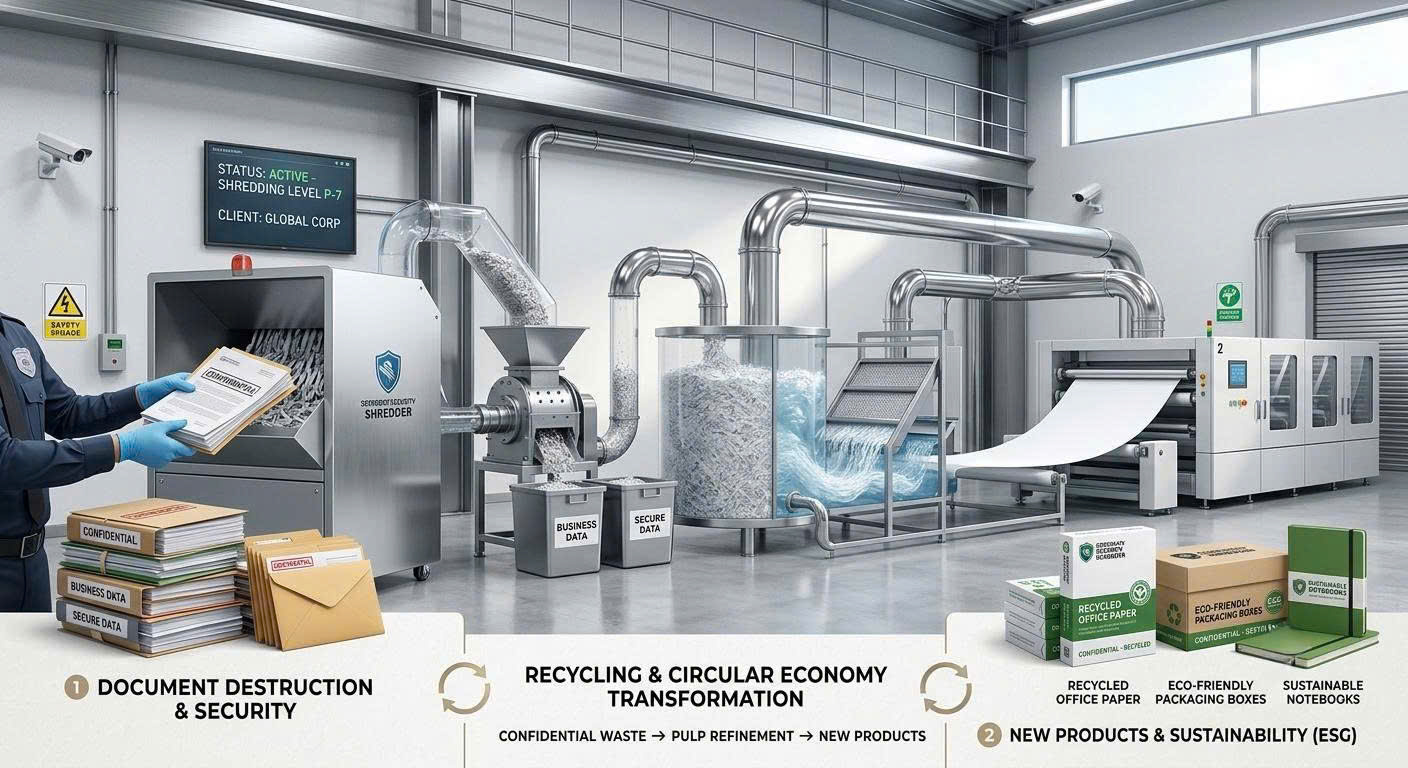
Before entering the recycling stream, confidential information must be permanently destroyed to prevent unauthorized access, information leaks, or compliance risks.
This is where professional secure document shredding services play a critical role.
Secure document destruction ensures that sensitive information is completely destroyed while allowing paper materials to continue through the recycling process.
Rather than viewing destruction and recycling as separate activities, businesses should see them as two essential stages of responsible paper management.
From Secure Document Shredding to Sustainable Recycling
A well-designed document disposal program does more than protect confidential information.
When documents are securely shredded and processed through responsible recycling channels, businesses can achieve multiple objectives at the same time:
- Protect confidential information
- Reduce the risk of data breaches
- Support environmental sustainability
- Improve waste management practices
- Contribute to ESG initiatives
- Participate in the circular economy
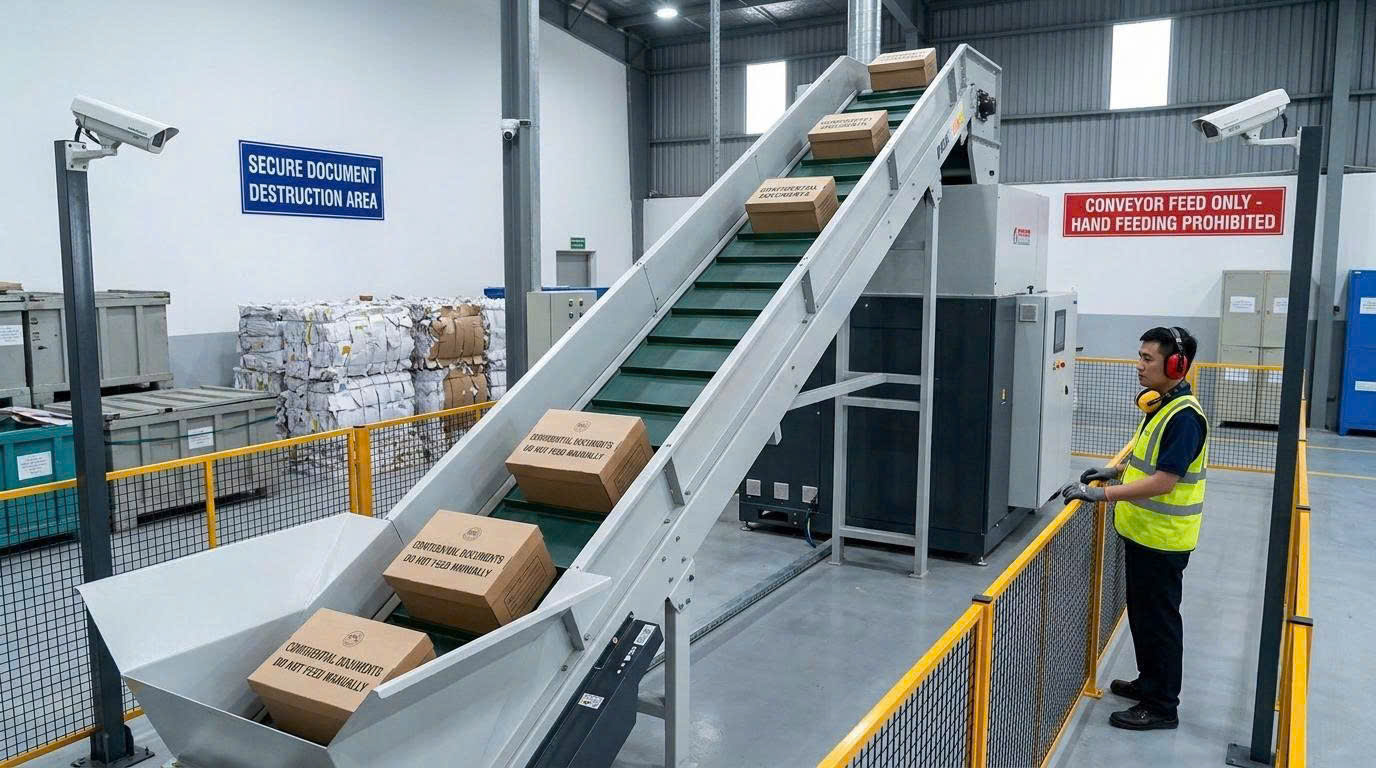
This approach transforms paper disposal from a routine administrative task into an opportunity to create environmental value.
At Minh Thanh Paper, secure document shredding is integrated with responsible recycling processes, helping organizations protect sensitive information while ensuring that paper materials continue their journey as valuable recycled resources.
Supporting ESG and Sustainability Goals
Environmental, Social, and Governance (ESG) performance has become an increasingly important consideration for businesses, investors, customers, and regulators.
Organizations are expected to demonstrate how they manage environmental responsibilities and use resources efficiently.
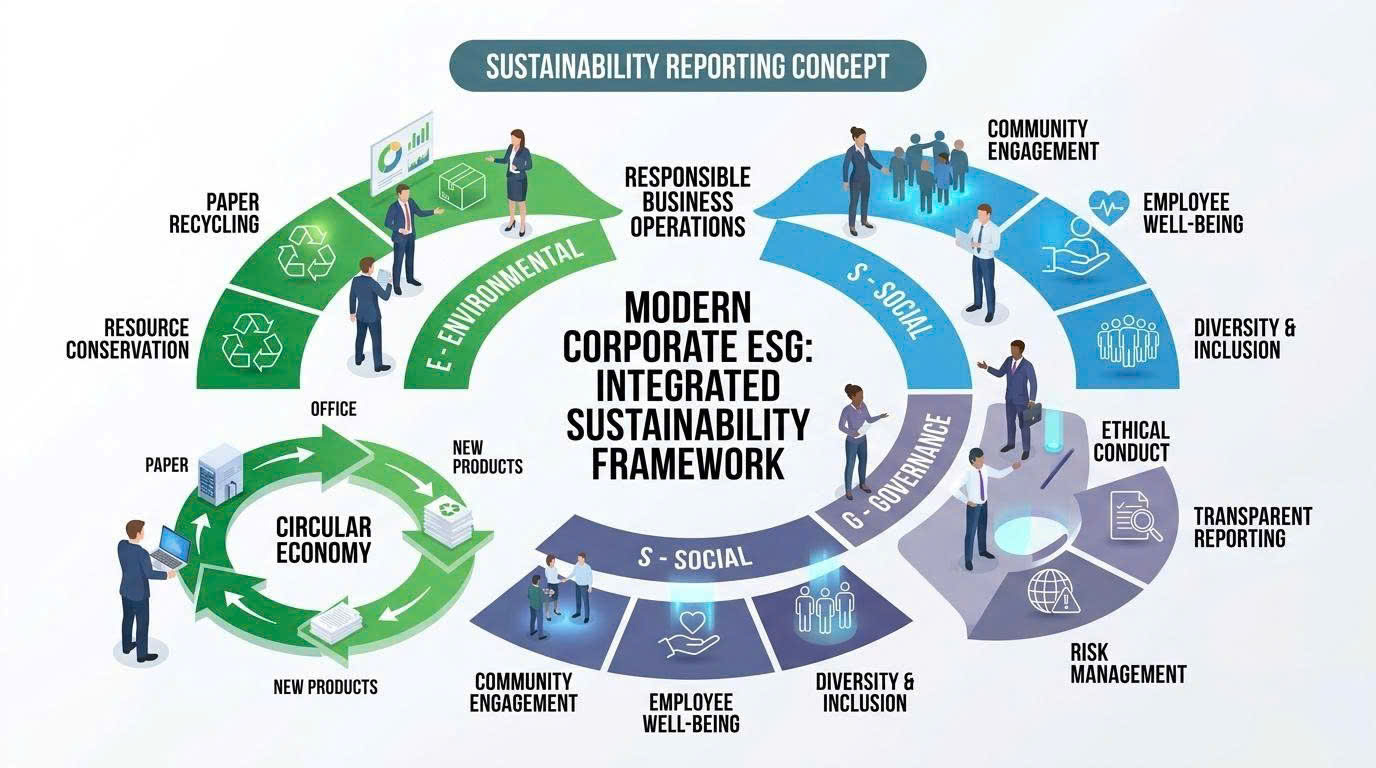
aper recycling supports several ESG objectives, including:
- Waste reduction
- Resource conservation
- Environmental stewardship
- Sustainable operations
- Circular economy participation
By combining secure document destruction with recycling initiatives, businesses can strengthen both their information security programs and their sustainability commitments.
Small Actions Create Significant Impact
The environmental benefits of paper recycling become increasingly powerful when viewed collectively.
Every box of documents securely shredded and recycled represents:
- Fewer resources extracted from nature
- Less waste sent to landfills
- Reduced environmental impact
- Greater support for circular resource use
Over time, these small actions contribute to meaningful environmental improvements for businesses and communities alike.
Conclusion
Recycling paper is one of the simplest and most effective ways organizations can reduce their environmental impact while making better use of existing resources.
By conserving natural resources, reducing energy consumption, lowering landfill waste, and supporting sustainability initiatives, recycled paper creates benefits that extend far beyond the recycling facility itself.
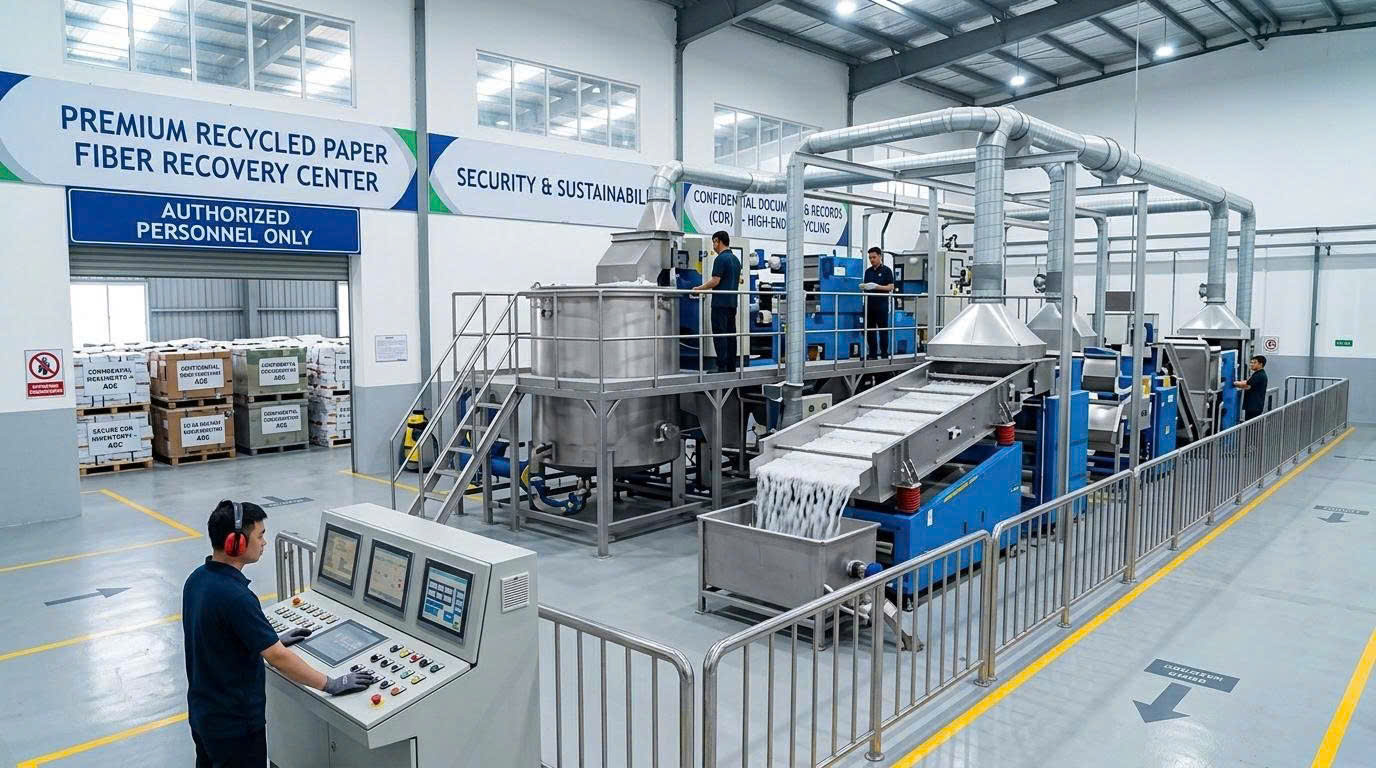
However, for businesses handling confidential information, recycling must begin with security.
Professional secure document shredding services ensure that sensitive information is permanently destroyed before paper enters the recycling stream, protecting both organizational data and environmental interests.
At Minh Thanh Paper, secure document destruction is more than a compliance requirement—it is the first step in transforming confidential paper waste into valuable recycled resources. Through the combination of secure shredding and responsible recycling, businesses can strengthen information security, support ESG goals, and contribute to a more sustainable future.
In our next article, we will explore another critical aspect of information management: the hidden risks businesses face when paper records are stored longer than necessary and why regular document destruction should be part of every organization’s security strategy.


