
When Paper Destruction Is Not the End
For many businesses, destroying documents and records is a necessary step to protect internal information, customer data, business contracts, and other confidential materials. However, few people realize that once these documents are destroyed, the paper itself begins a completely new journey with a different purpose and value.
As sustainability and circular economy practices become increasingly important worldwide, paper is no longer viewed as waste after destruction. Instead, it can be transformed into valuable recycled raw material for paper manufacturing. This process enables businesses to fulfill both their information security responsibilities and their environmental commitments.
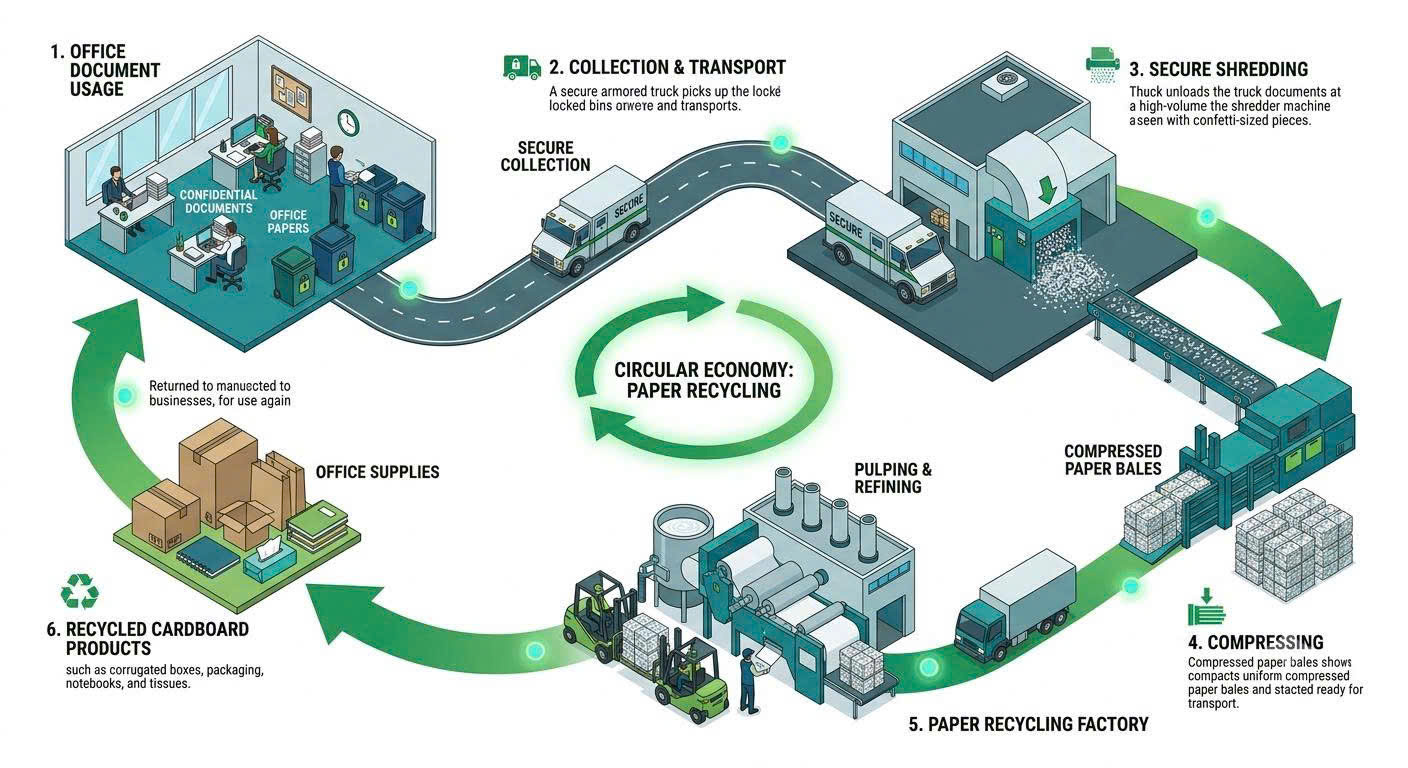
Step 1: Secure Collection and Transportation
The recycling journey begins with collection. Documents designated for destruction are sorted, sealed, and transported under strict security procedures to prevent unauthorized access or information leakage throughout the handling process.
Organizations with high security requirements—such as banks, financial institutions, hospitals, and educational organizations—often require additional monitoring and verification procedures during collection and transportation.
The primary objective of this stage is to ensure that documents reach the processing facility safely and securely without any risk of data exposure.
Step 2: Complete Destruction of Recoverable Information
Once received, the paper is fed into industrial shredding or crushing systems.
Unlike manual tearing or standard office shredders, industrial equipment is capable of processing large volumes of documents while destroying the paper structure to a degree where information recovery becomes virtually impossible.
This is the most critical stage of the entire process because data security remains the top priority.
Materials such as:
- Business contracts
- Employee records
- Financial reports
- Accounting documents
- Customer information files
are completely destroyed before entering the recycling phase.
Security and Sustainability Can Go Hand in Hand
Many people assume that document destruction simply turns paper into waste. In reality, modern processing technologies allow destroyed paper to remain a valuable resource.
Instead of being landfilled or incinerated, shredded paper can move into recycling operations and contribute to the production of new paper products.
This approach reflects the core principles of the circular economy model that is being adopted by businesses around the world.

Step 3: Material Sorting and Baling
After shredding, the paper is carefully sorted to remove non-recyclable components such as:
- Staples
- Paper clips
- Plastic covers
- Other contaminants
The processed paper is then compressed into bales, reducing storage and transportation requirements.
This stage improves logistics efficiency while ensuring high-quality input materials for recycling facilities.
Step 4: Converting Paper into Recycled Pulp
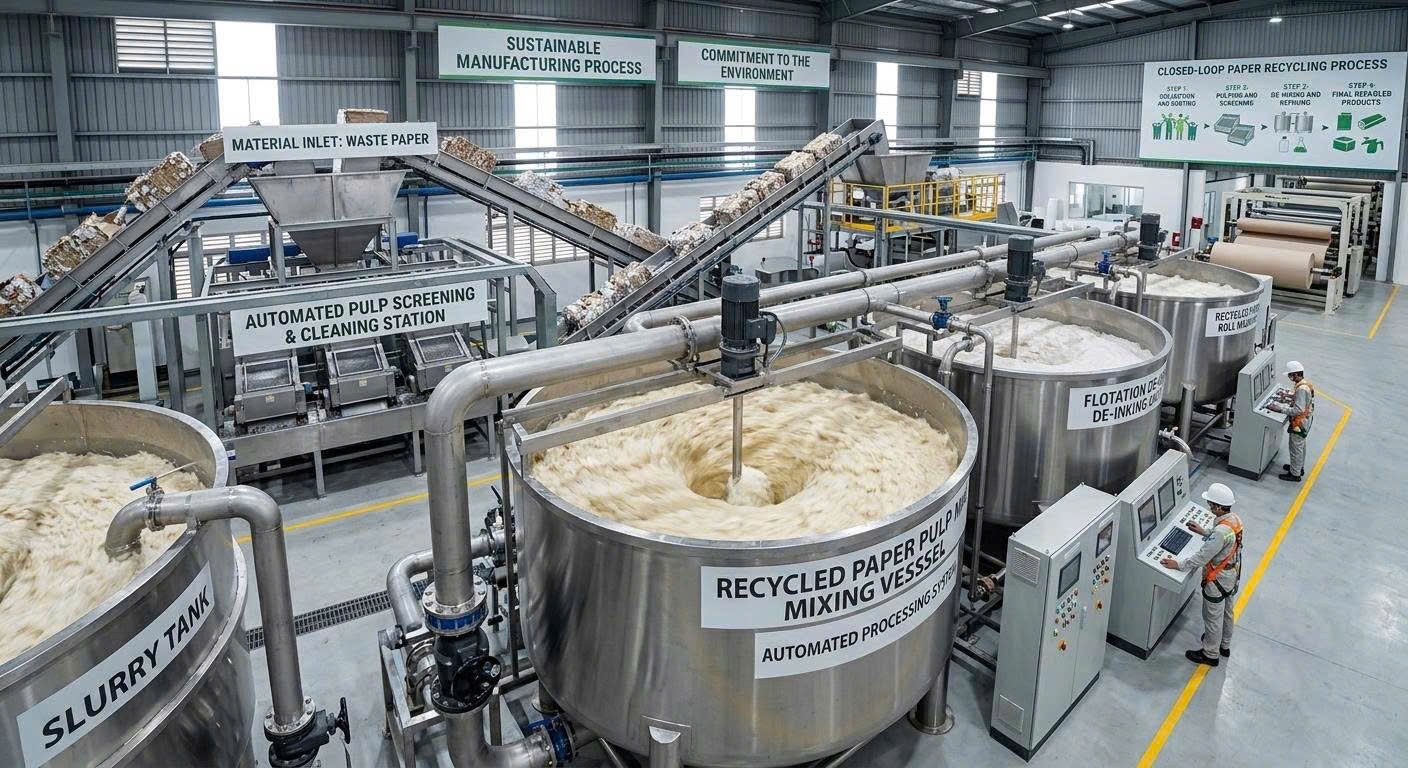
At recycling plants, the paper undergoes specialized processing to create recycled pulp.
The process typically includes:
- Fiber separation
- Ink removal
- Contaminant removal
- Material cleaning
- Pulp quality standardization
The result is a reusable raw material suitable for manufacturing a wide range of paper-based products.
Thanks to advances in recycling technology, the quality of recycled paper today has improved significantly and meets many industrial production requirements.
Step 5: Beginning a New Life Cycle
After processing, recycled paper can be used to manufacture numerous products, including:
- Corrugated cardboard boxes
- Paper packaging
- Industrial paper products
- Wrapping paper
- Tissue and sanitary paper products
- Eco-friendly packaging materials
Interestingly, some of these products may eventually return to the same businesses that originally generated the paper waste, creating a closed-loop resource cycle.
Environmental Benefits of Recycling Paper
Paper recycling provides substantial environmental advantages.
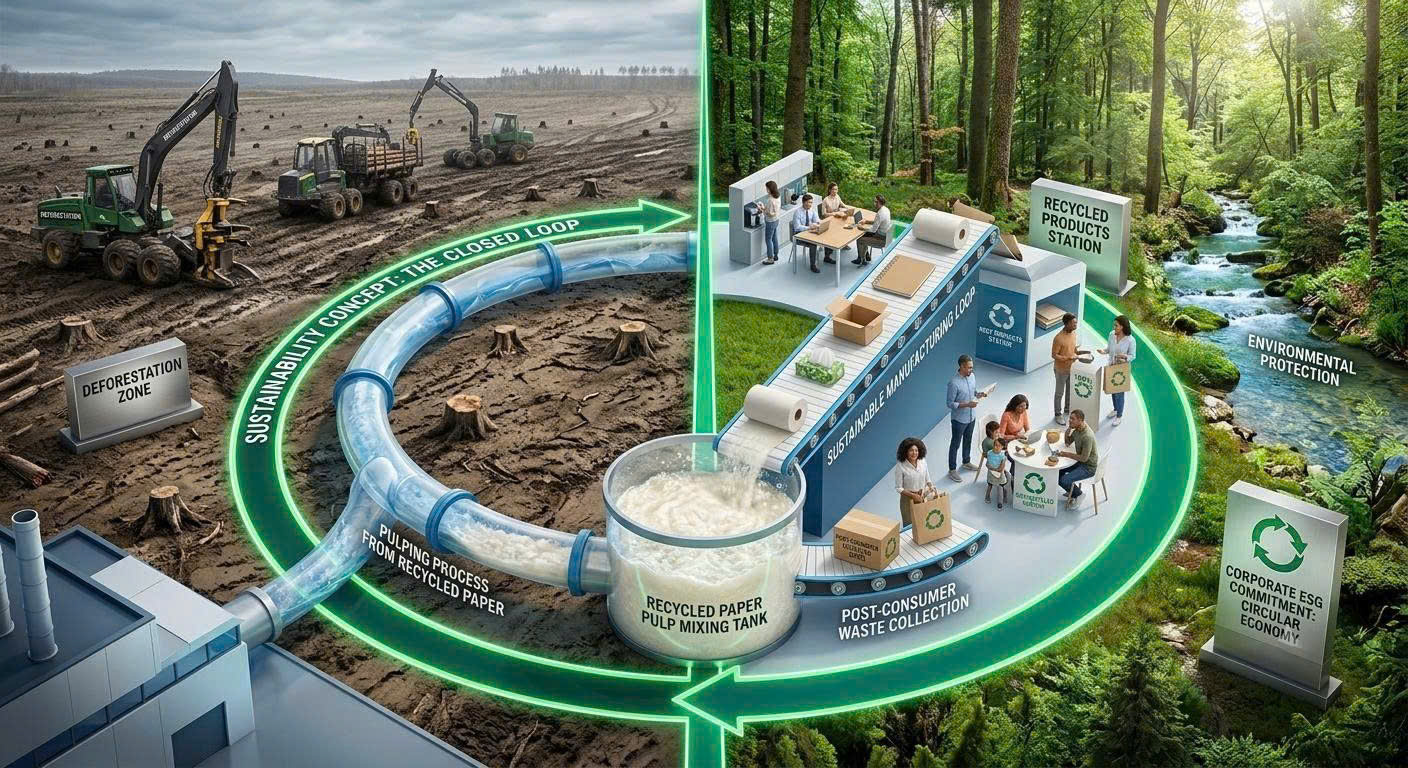
When paper is reused instead of discarded, the demand for virgin wood resources is reduced. This helps lower deforestation rates while decreasing energy and water consumption associated with producing paper from raw materials.
In addition, diverting paper waste from landfills reduces greenhouse gas emissions and minimizes environmental pollution.
For these reasons, many organizations now consider secure document destruction and paper recycling as part of their sustainability and corporate social responsibility initiatives.
Supporting the Circular Economy
Traditional linear economic models follow a simple path: produce, use, and discard.
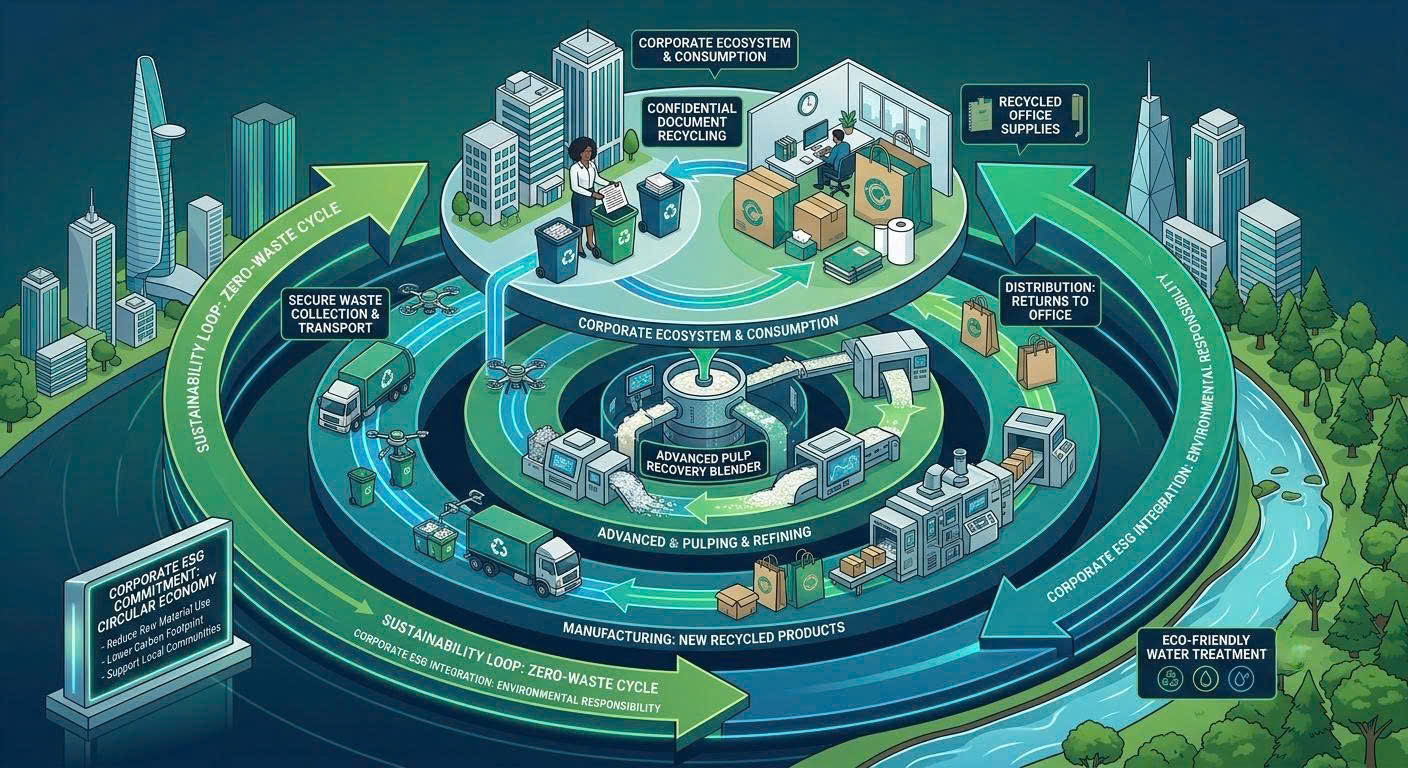
The circular economy, however, focuses on extending the lifespan of materials by promoting reuse, recycling, and resource recovery.
Paper is one of the best examples of this concept.
When documents are securely destroyed and recycled through proper processes, the material retains its value and is transformed into new products that continue serving society.
This approach represents more than a security solution—it is also a long-term sustainability strategy.
Conclusion
Document destruction is not the end of a paper’s life cycle.
After fulfilling its role in protecting sensitive information, paper can continue its journey as recycled raw material for a variety of useful products.
From safeguarding business data to reducing resource consumption and environmental impact, every sheet of paper processed through a responsible destruction and recycling system contributes to a more sustainable future.
As organizations place greater emphasis on information security and environmental responsibility, choosing a professional destruction and recycling partner becomes more than an operational necessity—it becomes part of a broader sustainability strategy.


